
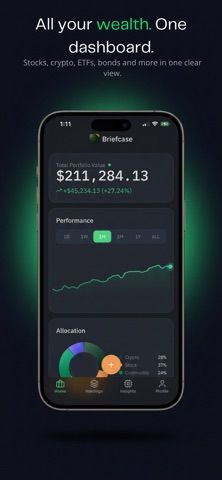
Briefcase is a portfolio dashboard for keeping different asset types in one place. The listing describes stocks, bonds, crypto, cash, and physical goods, with monitoring for price movements and AI-generated portfolio insights. Recent release notes add support for international stock markets and ETFs, multiple base currencies, saved AI conversations, portfolio news, daily briefs, and price alerts. Apple’s privacy label says the developer reports no data collected, though the app description says the AI agent can use news and internet research to ground responses; avoid adding sensitive information unless you have reviewed the developer’s data practices. The U.S. App Store lists a free three-day trial and a PRO purchase at $4.99, but does not make the billing period clear in the retrieved product table. Confirm renewal terms before starting a trial. It requires iOS 15.1 or later on iPhone or iPad; AI insights are informational, not investment advice.

Briefcase - AI portfolio
An AI-assisted portfolio dashboard for stocks, ETFs, bonds, crypto, cash, and physical assets, with market news and multi-currency views.
Overview
A closer look at Briefcase - AI portfolio.
A closer look
App screenshots

Choose with confidence
The useful details.
What it does
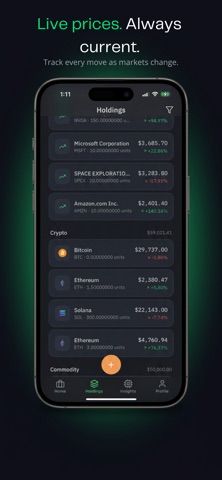
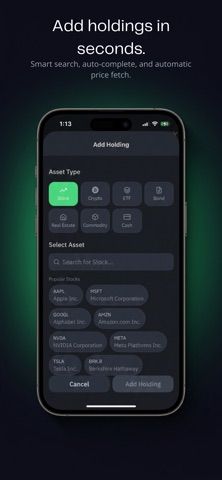
- Track stocks, ETFs, bonds, crypto, cash, and physical assets in a single dashboard.
- Review price changes and use AI chat to explore portfolio context and market news.
- See international holdings across supported exchanges and choose a base currency.
- Use portfolio news, daily briefs, saved conversations, and price alerts where available.
A good fit for
- Investors who want a single dashboard for several asset classes and markets.
- People who want AI-generated summaries alongside manual portfolio tracking.
Worth knowing
- The App Store lists a three-day free trial; check the trial conversion date and cancellation terms before starting it.
- The listed PRO price is $4.99, but the retrieved U.S. product table does not specify a billing period; verify the exact offer in the purchase sheet.
- AI output can be incomplete or wrong and should not guide a trade without independent research.
- Apple’s privacy label says no data is collected, while the listing describes an AI agent using market news and internet research; review the current developer privacy terms before entering sensitive financial details.
- Requires iOS 15.1 or later on iPhone or iPad.
Frequently asked questions
Answers based on the app’s official listing and reviewed information.
What can Briefcase track?
The listing describes stocks, bonds, crypto, cash, physical goods, and other portfolio holdings.
What does the AI feature do?
It can summarize portfolio movements and provide context using market news and internet research. Verify any claims independently.
Does Briefcase support international markets?
Recent release notes describe support for stocks and ETFs across 47 exchanges and multiple base currencies.
How much does Briefcase PRO cost?
The U.S. listing shows a three-day free trial and a PRO price of $4.99, but the billing period is not clear in the product table. Check the App Store purchase sheet.
Does Briefcase collect personal data?
Apple’s App Store privacy label says the developer reports no data collected. The listing describes AI features using news and internet research, so review current privacy terms before entering sensitive information.
Which devices can run Briefcase?
The U.S. App Store listing requires iOS 15.1 or later and lists iPhone and iPad.
Researched from official sources; this is not a hands-on review. Last checked 2026-11-19.
Keep exploring
More apps that might be a good fit.

Personal Ledger: Pro Finance
An offline double-entry ledger for tracking net worth, assets, liabilities, income, expenses, cash flow, and debts.

my expenses simplified
A basic personal expense tracker with receipt attachments, spending summaries, category budgets, trend charts, and detailed transaction notes.

Kesef: Expense Tracker
An offline expense and budget tracker with voice entry, recurring transactions, multi-currency records, and shared bill splitting.